
Snow-covered boots in January, muddy shoes during spring thaw, and dry indoor air during the heating season can all take a toll on flooring in Spokane Valley. Choosing between luxury vinyl plank (LVP), hardwood, and tile involves more than finding a color or style you like. The right flooring needs to handle local weather conditions, everyday traffic, and years of use without requiring constant repairs.
Quick answer: For most Spokane Valley homeowners, luxury vinyl plank offers the best overall combination of moisture resistance, durability, comfort, and manageable maintenance. Porcelain tile is often the strongest choice for bathrooms, mudrooms, and heavily used entryways where water and grit are frequent concerns. Hardwood remains an excellent option for living rooms and bedrooms, especially when indoor humidity stays consistent. The best choice depends on room conditions, household activity, product quality, and proper installation.
What Local Homeowners Should Know
-
LVP handles routine spills and tracked-in snowmelt well, making it practical for busy households.
-
Hardwood can expand and contract as indoor humidity changes between Spokane County’s cold winters and warmer seasons.
-
Porcelain tile resists water and surface wear, but its grout, installation method, and subfloor still require attention.
-
Proper subfloor preparation and moisture testing are just as important as choosing the flooring material itself.
Why Flooring Choice Matters in Spokane Valley
Flooring choice matters in Spokane Valley because local homes experience cold winters, warm and relatively dry summers, and seasonal changes in indoor moisture levels. These conditions create different challenges for wood, vinyl, and tile. A floor that performs well in a living room may be less suitable for a frequently wet entryway.
Homes in established neighborhoods such as Opportunity and Dishman may also have older subfloors that require preparation before new flooring goes down. Newer or remodeled homes around Greenacres and Veradale can present different installation needs.
At Clifton Legacy Construction LLC, we help homeowners compare flooring materials and plan installations that fit their homes. Our flooring services include luxury vinyl plank, hardwood, tile, and flooring replacement as part of residential remodeling projects.
Local Climate Data and Flooring Performance
Local climate data show that the Spokane region experiences most of its precipitation during the colder half of the year, making winter moisture management especially relevant to flooring decisions. Warm, dry summers and heated winter interiors also create seasonal humidity changes that affect how certain materials perform inside the home.
The National Oceanic and Atmospheric Administration’s published Spokane climate overview reports that approximately 70% of annual precipitation occurs between October and March, with about half of that precipitation falling as snow.
For local flooring, that means considering two different issues:
Outdoor moisture entering the home: Snow, slush, road grit, and melting ice can collect near exterior doors, hallways, and mudrooms.
Changing indoor humidity: Heating systems can dry indoor air during winter, encouraging wood flooring to lose moisture and shrink.
The National Wood Flooring Association explains that wood flooring responds to surrounding humidity by expanding or contracting. This makes proper acclimation and consistent indoor conditions important for hardwood installations.
How LVP, Hardwood, and Tile Compare in Spokane Valley
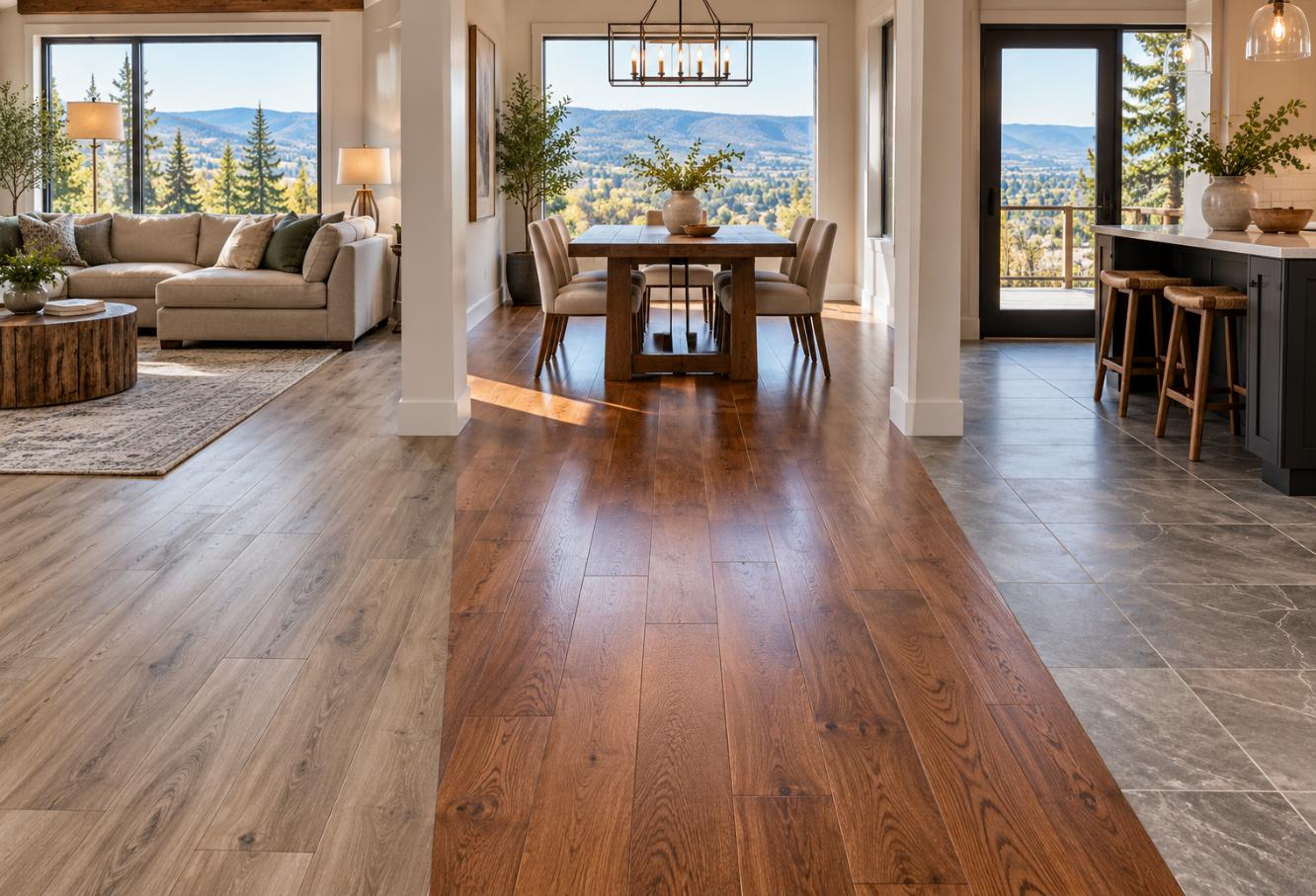
LVP provides the most balanced everyday performance for many households, while porcelain tile offers excellent resistance to moisture and abrasion. Hardwood provides lasting character and the potential for refinishing, but it requires greater attention to indoor humidity. All three materials can perform well when selected and installed for the right conditions.
Luxury Vinyl Plank: Best All-Around Practical Choice
Luxury vinyl plank is a strong option for homes where pets, children, and frequent indoor-outdoor traffic create daily wear.
Its advantages include:
-
Resistance to routine spills and tracked-in moisture.
-
Easier cleaning after muddy or snowy weather.
-
A softer, warmer feel underfoot compared with tile.
-
Wood-look designs without hardwood’s sensitivity to humidity.
-
Options suited to kitchens, hallways, and active living spaces.
However, waterproof LVP does not automatically make the entire floor assembly waterproof. Water can still reach the subfloor through perimeter gaps or seams, depending on the product and installation.
LVP also needs a properly prepared subfloor and manufacturer-required expansion allowances.
Hardwood: Best for Natural Beauty and Long-Term Renewal
Hardwood flooring remains appealing for homeowners who want authentic wood grain, a traditional appearance, and the ability to refinish suitable products.
In places like Millwood and established Valley neighborhoods, hardwood can complement both older architectural details and contemporary renovations.
Its main challenge is moisture movement. Dry indoor winter air can create gaps between boards, while excessive moisture can cause swelling or cupping.
Engineered hardwood often offers better dimensional stability than solid hardwood, although it still requires moisture control.
Porcelain Tile: Best for Wet, High-Wear Areas
Porcelain tile is an excellent choice for bathrooms, laundry areas, and entryways that regularly encounter moisture and abrasive debris.
Its hard surface handles ordinary foot traffic and repeated cleaning exceptionally well.
The tradeoffs include a cooler feel underfoot, harder impact when objects are dropped, and the possibility of cracked tiles if the supporting floor moves excessively.
Tile and grout alone do not waterproof a floor assembly. Wet areas may need a properly designed waterproofing system beneath the finished surface.
Local Impact on Comfort, Costs, and Daily Living
Flooring affects comfort, maintenance time, and long-term costs in Spokane Valley homes. Porcelain tile may make cleanup easier in a snow-covered entryway, while LVP can offer a more comfortable surface in a busy family room. Hardwood can provide a warm appearance and long-term renewal options when conditions are controlled.
Budget also matters.
LVP often offers an accessible balance of installation cost and performance. Hardwood may require a larger investment, while tile installation costs can increase when substantial subfloor reinforcement or preparation is needed.
The least expensive material is not always the lowest-cost option over the life of the floor.
Warning Signs Your Current Flooring Is Struggling
Warning signs of flooring trouble include changes in board shape, unusual movement, persistent moisture, and visible deterioration around seams. These problems can become more noticeable after the winter season, particularly near exterior doors and moisture-prone rooms. Identifying the source helps determine whether repair or replacement is appropriate.
Watch for:
-
Gaps between hardwood boards that remain unusually wide after seasonal humidity changes.
-
Cupping or raised edges that suggest wood has absorbed moisture.
-
LVP seams separating or lifting near doorways and high-traffic areas.
-
Soft or spongy spots that could indicate damaged subflooring.
-
Cracked tiles or deteriorating grout that may indicate movement or installation problems.
-
Persistent musty odors or discoloration around the floor perimeter.
-
Repeated buckling or uneven areas that interfere with normal walking.
When to Call a Flooring Professional
Professional flooring assessment is appropriate when damage keeps returning, a floor feels unstable, or moisture appears to be reaching the subfloor. Minor surface scratches and ordinary seasonal hardwood gaps may be monitored, but persistent lifting, cracking, swelling, or dampness deserves closer attention before additional flooring is installed.
We can help homeowners evaluate flooring replacement needs, identify preparation requirements, and compare suitable material options.
If a plumbing leak or active water intrusion is involved, the moisture source must be corrected before flooring replacement proceeds.
Common Local Causes of Flooring Damage
Common local causes of flooring damage include tracked-in winter moisture, seasonal humidity changes, subfloor movement, and surface abrasion from outdoor debris. In Spokane County, the combination of heating-season dryness and snowmelt at exterior doors makes moisture management particularly important. Installation quality determines how well a floor tolerates these conditions.
1. Snowmelt and standing moisture: Water collecting near entrances can damage hardwood and reach the layers beneath other flooring materials.
2. Dry winter indoor air: Heated indoor environments can cause hardwood to contract, especially when humidity falls outside manufacturer recommendations.
3. Subfloor problems: Uneven surfaces, excessive movement, and hidden moisture can cause clicking, lifting, cracking, or separation.
4. Grit and abrasive debris: Sand, dirt, and winter traction materials carried indoors can scratch finishes and accelerate visible wear.
Prevention and Maintenance for Every Season
Preventing flooring damage starts with controlling moisture, removing abrasive debris, and maintaining stable indoor conditions. These habits are especially valuable during eastern Washington’s snowy winters and dusty summer periods. Maintenance should follow the flooring manufacturer’s instructions rather than relying on one cleaning method for every surface.
Practical steps include:
-
Place absorbent mats at exterior entrances and clean them regularly.
-
Remove snowmelt promptly rather than allowing puddles to sit.
-
Sweep or vacuum grit using flooring-safe equipment.
-
Use furniture pads to reduce scratches and dents.
-
Monitor indoor humidity, particularly during the heating season.
-
Use cleaning products approved for the installed flooring.
-
Inspect door thresholds, plumbing connections, and exposed seams for moisture problems.
For many hardwood products, the National Wood Flooring Association recommends indoor relative humidity of approximately 30% to 50%, although the manufacturer’s specified range should take priority.
Expected Results From Proper Flooring Installation
Proper flooring installation should produce a stable, even, attractive surface that suits the room’s intended use. In local homes, this means accounting for moisture exposure, subfloor condition, seasonal indoor changes, and transitions between rooms. Correct preparation reduces avoidable installation problems, although no flooring material is completely maintenance-free.
Homeowners can reasonably expect smoother transitions, better day-to-day functionality, and maintenance requirements appropriate to the chosen material.
Actual service life depends on product quality, traffic, environmental conditions, and continued care.
Common Flooring Mistakes Homeowners Should Avoid
Common flooring mistakes include choosing materials solely by appearance, ignoring subfloor conditions, and assuming moisture-resistant products eliminate water damage risks. These decisions can create unnecessary repair expenses, particularly when winter moisture or seasonal movement exposes installation weaknesses. A room-by-room plan generally produces better results.
Mistake 1: Installing solid hardwood in a frequently wet entryway.
Consequence: Repeated exposure to snowmelt can cause staining, swelling, or finish damage.
Better approach: Consider porcelain tile or moisture-resistant LVP in frequently wet transition areas.
Mistake 2: Installing new flooring over an uneven subfloor.
Consequence: LVP joints may separate, and rigid tile installations may develop cracks.
Better approach: Evaluate flatness, structural movement, and moisture before installation.
Mistake 3: Assuming waterproof flooring eliminates leak concerns.
Consequence: Hidden moisture can damage the subfloor even when the finished planks remain intact.
Better approach: Address leaks promptly and follow appropriate moisture-control requirements.
Common Local Scenario: Updating an Older Home
A common flooring scenario in an older Opportunity neighborhood home involves replacing worn flooring throughout a kitchen, living room, and entryway. During winter, wet boots frequently cross the entrance, while the living room experiences lower moisture exposure and more consistent daily use.
A practical solution might include porcelain tile at the entry, LVP through the kitchen, and hardwood in the living area if the homeowner prefers natural wood and can maintain suitable indoor conditions.
Alternatively, continuous LVP could provide a coordinated appearance with simpler everyday maintenance.
This is an illustrative local scenario, not a specific completed project.
Related Flooring Installation and Remodeling Solutions
Flooring installation and replacement services can address worn surfaces, unsuitable materials, and rooms that no longer fit a household’s needs. We help homeowners assess flooring choices, plan installation details, and coordinate flooring updates with kitchen, bathroom, or broader remodeling work when appropriate.
Our flooring options include hardwood, luxury vinyl plank, and tile. The goal is to match each room with a material suited to its moisture exposure, traffic, appearance, and maintenance needs.
Considering new flooring for your home?
Comparing Your Flooring Options by Room
Comparing flooring options by room is more useful than choosing one material for an entire house without considering how each space functions. In Spokane Valley, entryways need protection against snowmelt, kitchens need practical spill resistance, and living areas may prioritize comfort, appearance, and long-term maintenance.
| Room | Recommended options | Main consideration |
|---|---|---|
| Entryway or mudroom | Porcelain tile or LVP | Snow, moisture, and grit |
| Kitchen | LVP or porcelain tile | Spills and frequent cleaning |
| Living room | Hardwood or LVP | Appearance, comfort, and traffic |
| Bedroom | Hardwood or LVP | Comfort and aesthetics |
| Bathroom | Porcelain tile or suitable LVP | Water exposure and installation requirements |
| Basement | Suitable LVP or tile | Concrete moisture testing and preparation |
These recommendations are starting points. The subfloor, room conditions, and individual product specifications must be evaluated before a final selection.
Flooring Services in Spokane Valley and Nearby Communities
Flooring needs vary throughout Spokane Valley and nearby communities, including Liberty Lake, Greenacres, and Otis Orchards. We work with homeowners in these areas and surrounding parts of Spokane County on flooring installation and residential renovation projects.
Whether the project involves replacing worn kitchen flooring or coordinating a larger interior update, material selection should reflect the property’s actual conditions.
The Cost of Ignoring Flooring Problems
Ignoring flooring problems can lead to more extensive repairs when moisture, movement, or structural damage continues beneath the visible surface. A loose plank may be relatively straightforward to address, but recurring moisture or deterioration of the subfloor can make a later replacement more complicated and expensive.
Local homeowners should pay particular attention to damage that worsens after snowy periods or recurring plumbing leaks.
Addressing the cause early can help protect the surrounding materials and support a more durable replacement.
Frequently Asked Questions About Flooring in Spokane Valley
These flooring questions address the practical decisions homeowners face when comparing LVP, hardwood, and tile in Spokane Valley’s climate. Moisture exposure, room usage, subfloor condition, and indoor humidity usually matter more than appearance alone when selecting a material for long-term performance.
1. Is LVP or tile better for snowy Spokane Valley entryways?
Porcelain tile is often the more durable choice for entryways that experience repeated exposure to wet boots, road grit, and heavy traffic. LVP provides a warmer, somewhat softer alternative with good everyday moisture resistance. Both require suitable subfloor preparation, and standing water should be removed promptly.
2. Does hardwood flooring shrink during Spokane County winters?
Yes, hardwood can shrink during winter when indoor heating lowers relative humidity. This can create gaps between boards, especially if the home experiences substantial humidity swings. Maintaining manufacturer-recommended indoor conditions and properly preparing wood before installation can help reduce excessive movement, although minor seasonal changes may still occur.
3. Is luxury vinyl plank waterproof enough for a basement?
Many LVP products resist water damage to the plank itself, but that does not mean they are suitable for every basement. Concrete slabs can transmit moisture, and water can collect beneath flooring. Testing the subfloor and following product-specific moisture and installation requirements are essential before proceeding.
4. Which flooring is best for kitchens in Greenacres?
LVP and porcelain tile are both practical kitchen flooring choices in Greenacres homes. LVP offers comfortable everyday use, moisture resistance, and a range of wood-look finishes. Porcelain tile provides excellent surface durability and cleanup performance. The best choice depends on the homeowner’s comfort preferences, budget, and subfloor condition.
5. Does tile flooring feel too cold during winters near Liberty Lake?
Tile generally feels cooler underfoot than LVP or hardwood because it transfers heat efficiently. That may be less comfortable during cold eastern Washington mornings. Area rugs or compatible radiant floor heating can improve comfort, but heating systems require careful planning and appropriate installation materials.
6. Is engineered hardwood better than solid hardwood for Spokane Valley homes?
Engineered hardwood can be a practical choice because its layered construction generally reduces dimensional movement compared with solid hardwood. However, it is still a wood product and remains sensitive to moisture. Proper installation, indoor humidity management, and choosing a product suitable for the room are essential.
7. Which flooring handles pets and scratches best?
Porcelain tile generally offers excellent resistance to scratches from everyday pet activity. Durable LVP products can also perform well, although scratch resistance varies by wear layer and product quality. Hardwood may show scratches more readily, but many solid hardwood floors can be refinished rather than completely replaced.
8. Should I replace damaged flooring before winter in an older Dishman home?
Replacing damaged flooring before winter can be beneficial when loose surfaces, moisture problems, or exposed subflooring could worsen with wet-weather traffic. However, the underlying problem should be evaluated first. If damage involves active leaks or structural movement, repairs and preparation should happen before installing the replacement material.
Choose Flooring That Works for Your Home and Local Climate
The best flooring for Spokane Valley homes is the material that balances durability, comfort, maintenance, and moisture resistance for the way each room is used.
LVP is a practical all-around choice, porcelain tile excels in wet and heavily trafficked spaces, and hardwood offers natural character with the potential for long-term renewal.
With thoughtful material selection and proper installation, homeowners can create attractive, functional spaces that are better prepared for the area’s changing seasons.
Get Flooring That Stands Up to Spokane Valley Living
We can help you compare materials and plan a flooring installation that fits your home, priorities, and budget.